Karte

Karte
六十余州名所図会 (筑前) 歌川広重 (1855)

2024年5月23日木曜日

第十二日  別府 - 大洲 - 久万高原 - 松山

クリック


久しぶりにお日様のない朝だか、雨は降っていない別府。十分に観光客は来ているようだが、往時の華やかさはどこへ?裏びれた、リニューアルを待つホテルは多い。私達のホテルもそんな感じ。


いつもはのんびり一般道を走るのに、今日は早い時間のフェリーに乗るために高速を使う。佐賀関という大分の出っ張りから三崎という佐多岬の出っ張りに近い港まで約一時間乗る。今度は船が大きいせいか、やっと半分の面積が埋まる程度の車の量だ。こういう事でもなければ、おおよそ訪ねることのない四国のしっぽ部分である。風力発電の風車が尾根に毛が立っているように生えている。その数、見える範囲だけでも50位はある。

今日はワルターの懐かしの四国遍路旅を回想した日。自分が辛い思いをした(誰に強制されてもいないのだから、仕方ないじゃん・・って思うんですけど)久万高原への道。

車に乗っていても「まだ~?」と思うほど長いのだから、歩いたらさぞかし・・・。永遠に終わらない道のように思えただろう。なんて車って快適で便利な文明の利器!

ワルターの足の状態は昨日と同じで回復してはいない。足を引きずりながら、松山城と道後温泉を見学。どちらも外からのみだったが、明かりのついている道後温泉は昼間より一層風情がある。温泉はホテルに帰って入る。


突然友人の訃報が入り、お葬式に間に合うように帰宅しようと思っている。思いもよらない急逝だけに、気持ちも落ち着かない。両親の世代を見送った後すぐに同世代を見送る時が来てしまった・・。


After a meagre breakfast, we leave Beppu and take the motorway to Saganoseki, the port that will take us to Shikoku. The boat only leaves every full hour and I'm worried that we'll miss the 09:00 ferry. It goes well and we are at the harbour on time. From Misaki we take the only road on this narrow but long peninsula, which is home to a large number of wind turbines. There are said to be people heree who have already seen them turning. Today there is only a gentle breeze and they are standing still.


Our next stop is the town of Ozu. Today is my "nostalgia day" because I walked through this town on my pilgrimage in 2016 and 2021. We visit the historic old town, which is probably particularly well known to the Japanese because NHK films its historical dramas here. The setting is just right. 
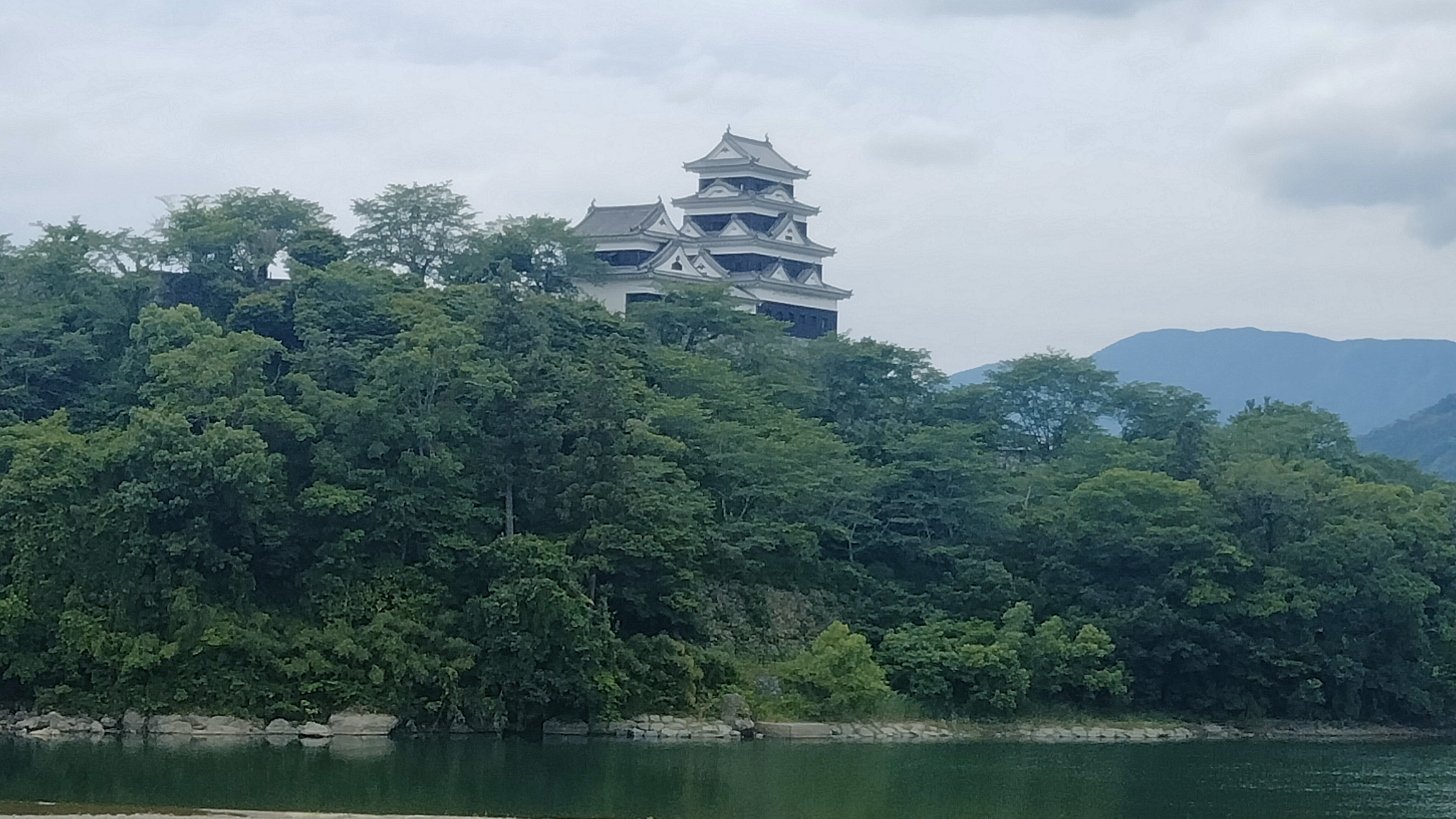
On my last visit, you couldn't see the castle because of construction work on a bridge. Today I finally manage to take a nice photo. We continue on the difficult pilgrimage route up to Komakogen. At temple No. 44, I show Yumiko where she should have the police and fire brigade look for me if I ever dare to come here again. The stretch between temple No. 44 and No. 45 is particularly difficult and old white men like me tend to fall off here. 


On the way, I actually wanted to visit my "girl friend" Kayo, who used to run a kind of "pilgrim's petrol station" in her house. I find the house, but Kayo, who should now be in her mid-80s, wasn't at home. I explain to her husband, who is quite demented, why I'm here. May he pass on my regards. He'll probably have forgotten my order a minute later. Must write Kayo a postcard!


We find our hotel in Matsuyama surprisingly quickly. As we still have time, we visit the castle, which towers quite high above the town. You have to use a chair lift to get up there. It's too late to see the castle inside. We take a walk around the extensive grounds and take the tram to what is probably the most famous onsen in Japan, the Dogo Onsen. 


When I visited it in 2021, it was completely covered. Today you can admire it again. The construction work is due to be completed in summer. Then you all have to come and admire the construction.

2024年5月22日水曜日

第十一日  山鹿 - 別府

クリック

 美味しい朝食を頂き、お世話になったご夫妻にお別れ。有難うございました!


最初に見学した建造物はきくち城と名づけられているが、むしろのろしなどの伝達の塔だったらしい67世紀ごろの建物。一見、中国的な三重の塔の様に見える。


バランスの取れた美しい建物だ。二つ目は八千代座という1910年に建てられ、今日まで劇場として使われている建物。


つい先日玉三郎さんも公演、海老蔵さんも公演が予定されている、という生きている劇場だが、昔の雰囲気が丁寧に残され、味がある。楽屋や仕掛けのある地下も見学させてもらえ、実に面白い。


ワルターが昨日(阿蘇で?)足をくじいたのか、びっこをひき始めたのでドラッグストアでシップを買い求める。別府について温泉地獄を見るも、足を引きずって歩くのが痛々しいので、早々にホテルに入る。


昨年塩の道120kmを歩いた時も、最後私は元気で、ワルターがグロッキーだったのを思い出す。今も似たような状況ですねえ・・・。


We say goodbye to Koba-san and visit a watchtower, the original of which was built here 1,300 years ago. It is a kind of "reporting centre" from which smoke signals are said to have been passed on to other towers. As Kyushu was the part of the country closest to China and Korea, people were already worried that attacks on Kyushu would be launched from there. 


We continue to an old (1910) kabuki theatre, which was restored a few years ago. You can feel the atmosphere that prevailed among the maximum 650 spectators. Even today, the best kabuki actors come here to perform on a "real" stage. Numerous advertising posters hang from the ceiling. 

The stage can be rotated from underground. In two places, actors can be lifted onto the stage "from the underground". Out of nowhere, so to speak. A friendly woman explains the eventful history of the theatre in detail. 
After Kabuki was no longer so attractive, the building became a cinema. As cinema-goers slowly but surely declined, the theatre fell into disrepair and was only restored to its original state a few years ago. 


Of course, we also take a look at the "underground" from which the actors could be lifted onto the stage. It only took four - probably strong men - to turn the 10 metre (diameter) stage. The mechanism is labelled "KRUPP" in large letters.
So they not only built cannons, but also revolving stages in Japan.


In the afternoon we reach Beppu, a city from which hot steam rises even from the sewers. Clouds of smoke can be seen over the whole city. We only visit two of the 10 hot springs that are open to the public. The fun is not cheap: 500 yen to look at bubbling mud.

Tourists come here in droves, mainly Chinese.
They can be recognised everywhere by the fact that they walk around with long "selphie sticks".

We move into a traditional Japanese room in a somewhat run-down hotel right next to the main road.


2024年5月21日火曜日

第十日 熊本 - 阿蘇山 - 大観峰 - 山鹿


クリック

夜の心地よいめぐみ温泉(山鹿市 やまが)、美味しいディナーと楽しいおしゃべりの後に余力なく、旅日誌なしで寝る。

21日朝は熊本脱出に手古摺る。熊本と阿蘇の間に半導体の工場ができたこともあって、熊本周辺の交通量は増えるだろう、と地元のご夫妻との話で聞いた。


阿蘇は草千里の駐車場に車を停めて歩き始めたが、日本でこれだけスケールの大きい、遠くまで望める広い空間は珍しい。阿蘇はつい最近火山活動が活発になったということで、河口付近まで近づけなくなっていた。そこで中岳から火口を望むことを期待して登り始めたものの、砂千里が下に見えるところからの下りが細かい砂と斜面が急でとても私達の能力を超えていると感じ、中岳を道半ばで諦める。残念だが、怪我よりはマシ。お蔭で大観峰と押戸石にゆっくり時間を避けた。大観峰は阿蘇の外輪山を360度見渡すことができるところ、押戸石はマジカルな大きな岩群で、その昔、人々が祈りを捧げたところらしい。ある岩は多くの鉄分を含んでいるのか、磁石を近づけると針がグルグル回ってしまう。日本版ストーンヘンジ。

夜、天城高原のご近所さんであるひとみさんの紹介で、熊本のお姉さんご夫妻のところで一泊させて頂くことに。何と言ってもユニークなのが、お姉さまのペットが犬や猫ではなくかなりおおきな動物であること。象ほど大きくないものの、家の中で飼えない動物。なんでしょう?ウマ1頭とポニー2頭。広々とした草原で飼われている。
お姉さまのご主人は地元の出身で、20年ほど前に東京から戻られお祖父さまが始められた家業を引き継がれている。地元のいろいろな事情をお伺いできて、旅は一味違うものとなった。


Getting out of Kumamoto is not easy! It takes us an hour to reach the outskirts of the city, with so many traffic jams slowing us down. After two hours we reach the Aso - volcano and start our ascent. What we don't realise: The crater rim of the volcano has been closed for a week due to significantly increased "activity". Nobody is allowed near it. So we have no choice but to take a long and arduous track that leads further up around the crater. 


After half the distance we give up because there is suddenly a steep and slippery slope down. Our first defeat on this trip. Somewhat disappointed, we turn back. 


All we remember is the sulphurous smell and the cloud of smoke. We are told that the Aso-san can be seen particularly well from a viewpoint about 30 kilometres away. 


So we drive up to DAIKANBO and say goodbye to the Aso-san from afar. 


The last destination of the day is a mysterious place, the Stonehenge of Kyushu. It is called OSHITOISHI. 


There are some large boulders scattered on a hill, which were sacred to the "natives" of the area. The road - or rather, the track to it - could also be used by car manufacturers as a test track for shock absorbers! One pothole follows the next. There are said to be engravings and patterns on the stones left there by the indigenous people. We can't find them and therefore can't read them! What we do realise, however, is the magical power of the largest boulder.


It can "reverse" the direction of the compass. We were given a small compass so that we wouldn't doubt it. It's true! The compass needle is going crazy. NORTH becomes SOUTH! 


We "refuel" here with these magical powers and continue to the Koba-san, where we first admire and feed their horses and then take them to a beautiful onsen. This exhausting day ends late in the evening after a good dinner.


2024年5月20日月曜日

第九日 長崎 - 雲仙 - 天草 - 熊本


クリック

長崎は今日も晴れで始まった。車を車庫から出して、荷物を詰め込み雲仙に向かって出発。
長崎郊外の田んぼという田んぼが荒廃して、最早田んぼとして使われていないのを目の当たりにし、日本は今にお米も自給自足できなくなる日が近いのではないかと懸念する。

雲仙


仁田峠付近の展望台から普賢岳の頂きがちょっと頭を出しているのが見え、その隣に1991年の噴火でできた平成新山が巾をきかせている。新山の山肌を見ると噴出されたゴロゴロした石や、流れ出た溶岩流の跡をはっきり見て取れる。雲仙は温泉町を通り過ぎるとき、硫黄島のにおいが強くし、湯気が噴出していたが、人影は多くなく、往時は勢いのあったであろうホテルが寂しげに立っていた。


口之津港からフェリーで天草の鬼池に向かうが、思っていたより利用者は多く、フェリーはギチギチに車を積んで出発。乗り切れずに次のフェリーを待つ人もでた。学生時代に友達とバスで回った天草に私は殆ど半世紀ぶりに戻ってきた。あの頃の天草は今にも増して秘境、世界の果てという雰囲気のある所だった。今は道路が整備されたが、人口が増えたとは思えない。崎津の教会を対岸から眺める位置で、地元の元船乗りさんと話す。


自分は昭和38年に高校を卒業したが、それからセネガルやマダガスカル付近で漁をする船にのっていたことがあるし、タンカーで駿河湾付近を航海したこともあった、という話からすると彼はエンジニアか?漁師さんではなさそう??今や崎津では3‐4の家族が漁を生業としているのみ。自分が小さい頃は一学年に50人のクラスが2組ぐらいあったこともあったが、今は学校もない。「廃村になるのかな」と寂しそうに、でも「そんなもんさ」といった調子で話す。

この旅で5つ目になるお城、熊本城を外から見る。すでに閉門されている時間。やはり石垣は地震でかなりのダメージを受けていた。崩れた石の一つ一つに番号が付けられお濠に並べられている。その数は膨大で、気が遠くなりそう。私が生きている間に石垣の再生はちょっと無理じゃないかと思う。


Today is Yumiko's "Nostalgia Day". We are visiting an island that she last visited almost 50 years ago as a student with a few friends. But first things first! We make slow progress from Nagasaki towards Unzen. At some point, however, we quickly take a small road up to the most active volcano in Japan, Unzen. The last major eruption was in 1991, causing extensive damage at the foot of the mountain and destroying around 2,000 houses. It also created a "new" peak (1,486 metres) which towers over the "old" one by about 50 metres. It smells strongly of sulphur.


We take a nice road down to the harbour of Kuchinotsu, from where we take a ferry to the island of Amakusa. It only takes 30 minutes.
Yumiko remembers something of her journey back then, but we (narrowly) miss our first destination, the mission church in Oe. During the persecution of Christians, Amakusa was the last refuge for many Christians because the island was difficult to reach. 


After the persecution ended, some French missionaries came here and built a small church in almost every fishing village. From Oe, we drive on to Sakitsu, where another church, together with the small fishing village, was recognised as a World Heritage Site in 2018.
The church is probably the only one where believers pray on tatami mats. We have a long chat with an elderly man from the village, who tells us that "in the past" there were 400 children here.
Nothing is left of it. Four families still live from fishing, the young have long gone and the old are dying. He shrugs his shoulders. That's just the way life is.


Our last destination was the Amakusa Collegio Museum. It is interesting because it tells the story of the "Four Boys", who were the first Japanese ever to be allowed to leave Japan and travel to Rome in 1590 - 1598 as part of a delegation from the Tenno. 


They learnt Latin, western music and culture and returned with a number of instruments and machines previously unknown in Japan. Among them was a printing press modelled on Johannes Gutenberg.

 This machine "revolutionised" the distribution of printed matter in Japan. Shortly after their return, however, the political situation in Edo changed and one of them was exiled to Macau, for example!


It is now only two hours to Kumamoto. We reach the city in the early evening, check into a run-down hotel and walk round the castle. Unfortunately, it was badly damaged by an earthquake in 2016. But it is being rebuilt. It will take decades, but it will be worth it. Until then, thousands and thousands of chunks of stone lie carefully "labelled" in the castle moat, waiting for their turn.